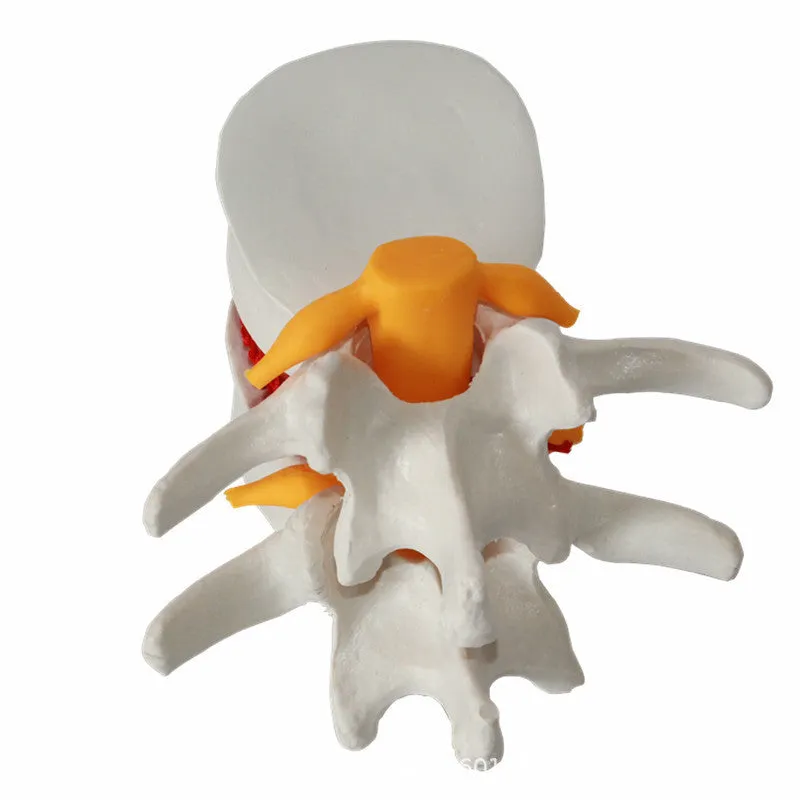
Medical demonstration model of human lumbar intervertebral disc herniation, PVC anatomy training aid measuring 11x10x7.6 cm for orthopaedic education and clinical patient explanation, white medical teaching model


Medical demonstration model of human lumbar intervertebral disc herniation, PVC anatomy training aid measuring 11x10x7.6 cm for orthopaedic education and clinical patient explanation, white medical teaching model
Lumbar Intervertebral Disc Herniation Demonstration Model for Medical Training and Patient Education

This anatomical demonstration model provides a three-dimensional representation of a lumbar intervertebral disc herniation, designed specifically for medical education and clinical explanation purposes. Measuring 11 centimetres in length, 10 centimetres in width, and 7.6 centimetres in height, this compact model offers a tangible visual aid for understanding one of the most common spinal conditions encountered in orthopaedic and neurological practice. The white PVC construction clearly displays the anatomical features relevant to disc prolapse, allowing medical students, physiotherapists, and clinicians to demonstrate the structural changes that occur when the nucleus pulposus protrudes through the annulus fibrosus. At just 0.22 kilograms, this lightweight model is easily portable between classrooms, consultation rooms, and training sessions, making it a practical addition to educational resources.
Features and Construction
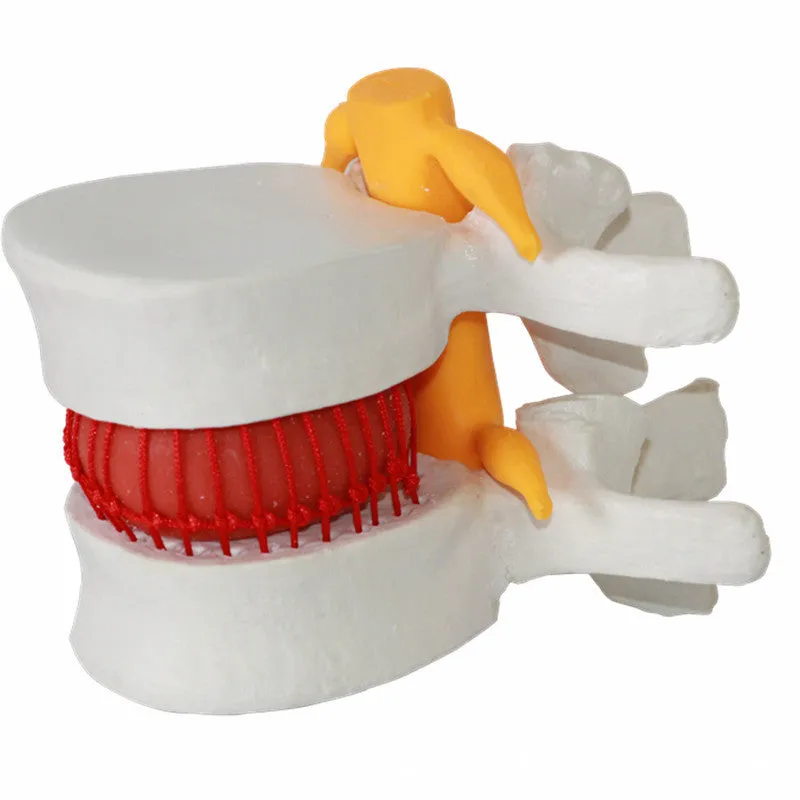
This medical demonstration model has been designed with educational clarity as its primary objective. The specific anatomical details focus on representing a lumbar intervertebral disc herniation scenario, providing visual learners with a concrete reference point that complements textbook diagrams and imaging studies.
Material and Build
The model is constructed from PVC (polyvinyl chloride), a material selected for its durability and suitability for repeated handling in educational environments. This white material allows for clear visualisation of the anatomical features without colour distraction, focusing attention on the structural representation of the disc herniation. The solid construction enables the model to withstand regular use in classroom demonstrations and clinical settings where it may be passed between multiple users during training sessions.
Size and Practical Fit
With dimensions of 11 centimetres by 10 centimetres by 7.6 centimetres, this compact model fits comfortably in one hand for detailed examination during demonstrations. The modest size makes it suitable for display on consultation room desks or lecture podiums without occupying excessive space. The accompanying packaging measures slightly larger at 11.5 by 11 by 8 centimetres, providing protective storage when the model is not actively being used for teaching purposes.
Uses and Placement

This demonstration model serves multiple educational functions within medical and allied health environments. Its primary purpose is to bridge the gap between two-dimensional imaging and three-dimensional anatomical understanding for both professionals and patients.
Event or Professional Use
In formal educational settings, this model functions as a training aid for medical students learning about spinal anatomy and pathology. Orthopaedic surgeons, neurologists, and physiotherapists can utilise the model during lectures, workshops, and continuing professional development sessions to demonstrate the mechanics of disc herniation. The clear visual representation helps explain how pressure distribution changes within the intervertebral disc and how this relates to clinical symptoms and treatment approaches.
Everyday Home Use
While primarily designed for professional environments, this model may also serve in home study situations for distance learning students in medical fields. The compact size and lightweight nature make it suitable for individual study alongside textbooks and online resources. However, its construction and purpose remain focused on educational demonstration rather than decorative display.
Benefits and Buying Value

The practical advantages of this demonstration model centre on its specific educational application and durable construction. Unlike generic anatomical models, this product focuses specifically on one clinically relevant condition, providing targeted learning support.
Reuse and Low Maintenance
The PVC material requires minimal maintenance beyond occasional wiping with a damp cloth to remove dust or fingerprints accumulated during handling. This low-maintenance characteristic supports repeated use across multiple teaching sessions and with different student cohorts over time. The material's durability helps maintain the model's structural integrity despite regular handling during demonstrations.
Why Choose This Product
This lumbar disc herniation model offers a specialised teaching tool that addresses a specific gap in anatomical education resources. While comprehensive spinal models exist, this focused demonstration model allows educators to highlight the particular anatomical changes associated with disc prolapse without the distraction of surrounding structures. The compact dimensions and lightweight design enhance its practicality for educators who need to transport teaching aids between locations or store multiple models in limited space.